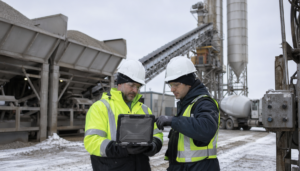
Productivity inside a batching operation is no longer driven by equipment alone. It is driven by scheduling systems, plant controls, dispatch communication, estimating software, accounting platforms, mobile devices, internet reliability, cybersecurity, and the people responsible for keeping all of it running together. That is why strong information technology support has become a serious business advantage for companies that depend on consistent output, accurate loads, and tight project coordination. For businesses researching Minnesota Concrete Batching Plants, the IT conversation belongs right beside the conversation about plant capacity, uptime, and growth.
Concrete Production Depends on Stable Digital Systems
A modern concrete operation runs on more than mixers, aggregate, and trucks. It also runs on the digital systems behind the scenes that keep daily production moving. Dispatch has to send the right information at the right time. Office staff have to generate invoices, communicate with vendors, and track deliveries without interruption. Plant personnel need reliable access to controls, job details, internal files, and support when systems stop cooperating. When those tools are slow, outdated, disconnected, or mismanaged, the entire operation feels it. The problem does not stay in the office. It reaches the yard, the drivers, the schedule, and eventually the customer.
That is why IT support for concrete batching plants should be viewed as operational support, not just technical support. A capable IT partner helps reduce friction across the entire business. That includes keeping workstations updated, securing files, improving network reliability, standardizing user access, supporting printers and tablets, managing backups, and helping leadership avoid the kind of small technical breakdowns that quietly drain hours from the day. When the systems work, the team can focus on production. When the systems fail, productivity gets replaced by delays, confusion, and rework.
Unsupported Systems Create Real Productivity Risk
One of the clearest reasons batching plants need dependable IT support is that old systems do not just become inconvenient. They become harder to secure, harder to support, and more likely to interrupt work. Microsoft states that Windows 10 reached end of support on October 14, 2025, which means affected machines no longer receive regular security updates, fixes, or standard technical support unless they are handled through special upgrade or Extended Security Updates paths. For companies still relying on aging Windows environments in plant offices or production-adjacent workflows, that is not a minor issue. It is a direct threat to reliability and business continuity. Windows 10 end of support matters because unsupported devices stay in service long after they become a weak point in the business.
In a concrete business, one unsupported machine can affect much more than one desk. It can slow down ticketing, disrupt reporting, interfere with shared files, complicate vendor software compatibility, and leave the company exposed if a cyber incident starts with an old login, an unpatched device, or a weak connection point. Good IT support addresses those risks before they show up as emergency problems. It builds upgrade plans, keeps inventories current, replaces devices on purpose rather than in a panic, and helps management budget for technology in a way that protects uptime.
Cybersecurity Is Now Part of Plant Productivity
Cybersecurity used to sound like a separate topic from day-to-day production. That line is gone. The latest CISA cybersecurity advisories show how active and ongoing the threat environment is, and CISA added eight more entries to its Known Exploited Vulnerabilities catalog on April 20, 2026 based on evidence of active exploitation. Around the same time, CISA also published multiple industrial control system advisories dated April 16, 2026, reinforcing the point that vulnerabilities affecting operational environments are current, real, and relevant to organizations that rely on industrial technology.
That matters for batching plants because production environments increasingly live in the overlap between office IT and operational technology. A plant may rely on network-connected devices, remote vendor access, shared credentials, cloud file access, vendor software updates, GPS systems, invoicing platforms, and field communication tools all at once. A disruption in one area can spill into the others very quickly. CISA’s Known Exploited Vulnerabilities Catalog exists precisely because organizations need to know which weaknesses are being used in the wild right now, not just which ones are theoretically dangerous.
The ransomware side of the picture is just as serious. The official #StopRansomware Guide is built to help organizations reduce both the likelihood and the impact of ransomware incidents, and IBM’s X-Force Threat Intelligence Index 2026 reports a 44% year-over-year increase in the exploitation of public-facing software or system applications and a 49% increase in active ransomware groups. Those are not abstract security statistics. They translate into lost access, lost time, disrupted scheduling, and costly recovery when a business is not prepared.
Good IT Support Prevents Small Problems from Becoming Expensive Delays
The best IT support does not wait until a plant is already down, files are unavailable, or the office cannot print tickets. It builds systems that make interruptions less likely in the first place. That means structured backups, role-based permissions, multi-factor authentication, hardware planning, documented recovery procedures, secure remote support, and routine patch management. It also means someone is paying attention to what is happening in the broader threat and support landscape so the company is not caught off guard by something avoidable.
That broader discipline is exactly why the NIST Cybersecurity Framework 2.0 remains so valuable. NIST describes the framework as a tool organizations can use to understand, assess, prioritize, and communicate cybersecurity risk, and the agency continues to publish updates and implementation resources. For a concrete batching business, that kind of structure helps leadership move from reactive firefighting to practical risk management. It gives shape to decisions about access control, inventory, training, incident response, recovery, and vendor oversight.
Strong IT support also helps companies avoid the trap of assuming they are better prepared than they really are. Cisco reported in its 2025 Cybersecurity Readiness Index that only 4% of organizations worldwide reached the “Mature” level of readiness needed to withstand current threats. That gap matters because many businesses believe they are covered simply because they have antivirus, a router, and a cloud subscription. Real readiness is deeper than that. It requires visibility, process, testing, and support that stays current. The Cisco Cybersecurity Readiness Index underscores how many organizations still have work to do.
Concrete Batching Operations Need Support That Fits the Real World
Minnesota operations face practical realities that make reliable IT support even more important. Teams may be coordinating across office staff, plants, trucks, vendors, and jobsites while managing weather disruptions, seasonal demand shifts, compressed timelines, and tight customer expectations. In that kind of environment, support cannot be generic. It has to match the actual pace of the business. It should account for how quickly dispatch needs an answer, how expensive downtime becomes during production hours, and how frustrating it is when software, hardware, and communications all depend on each other at once.
That is why a worthwhile IT partner does more than fix isolated issues. It learns the workflow. It understands which systems are mission-critical, which users need priority support, what must stay running during peak hours, and what recovery plan makes sense if a device fails or a network problem hits at the wrong time. It documents the environment, standardizes equipment, reduces one-off workarounds, and gives ownership clearer visibility into technology risk. Over time, that consistency becomes a competitive advantage because the operation becomes easier to manage and more dependable under pressure.
The Threat Landscape Is Moving Faster Than Many Businesses Realize
Recent security reporting makes another point clear: the pace of change is increasing. Microsoft’s Security Blog has highlighted large-scale phishing and supply-chain concerns in 2026, including research on device-code phishing campaigns and mitigation guidance around the Axios npm compromise. Cloudflare’s 2026 Threat Report similarly points to AI-driven attacker activity and a threat environment that rewards stealth and speed. For businesses that rely on stable operations, this means the old set-it-and-forget-it approach to technology is no longer enough.
For a batching plant, this does not mean leadership needs to become a cybersecurity research team. It means leadership needs an IT support structure that stays informed, translates risk into practical steps, and keeps the company moving without unnecessary drama. The right provider turns outside threat intelligence into internal action. That could mean improving email security, segmenting networks, tightening remote access, replacing obsolete hardware, testing backups, or updating response procedures. Each step protects productivity because each step reduces the chance that a technology issue becomes an operations crisis.
Conclusion
Minnesota concrete batching plants need IT support because modern productivity depends on stable systems, secure access, current devices, reliable communication, and fast recovery when something goes wrong. The companies that treat IT as part of operations put themselves in a stronger position to protect uptime, support employees, serve customers, and grow with confidence. In a business where delays ripple outward quickly, dependable IT support is not extra overhead. It is part of what keeps the work moving.