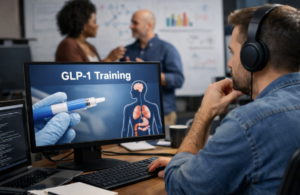
The modern IT professional works in a world that rewards speed, adaptability, precision, and endurance. People in information technology are expected to solve problems fast, stay calm under pressure, learn new systems constantly, and perform at a high level even when projects stack up and priorities shift by the hour. Anyone who keeps up with Information technology on Wikipedia, Reuters Technology, and CIO News can see how quickly the landscape changes, especially as AI, cloud infrastructure, cybersecurity, and enterprise transformation continue to reshape the profession.
That is exactly why health conversations inside the IT world need to mature. This is no longer just about looking better, losing a few pounds, or following the latest trend. It is about protecting focus, mobility, stamina, and long-term work capacity in a profession that already demands a great deal from the mind and body. When a field is growing, evolving, and asking more from its people, the smartest professionals pay attention to anything that can help them stay strong and sustainable over time. U.S. labor data shows computer and information technology occupations are projected to grow much faster than average from 2024 to 2034, while CompTIA reports that the tech workforce remains a major part of the U.S. economy and is expected to expand again in 2026.
The IT Profession Runs on Performance, Not Just Knowledge
A lot of people still talk about IT work as if it is purely intellectual. That misses the full picture. The reality is that performance in IT is deeply connected to energy management, physical resilience, emotional steadiness, and the ability to stay sharp under sustained cognitive demand. Long hours at a desk, constant alerts, incident response, deadlines, change management, meetings, and after-hours troubleshooting can wear a person down even when they love the work. The American Psychological Association notes that workplace burnout is tied to chronic workplace stress that has not been successfully managed, and that matters in any high-demand profession.
That is one reason the health side of professional performance deserves more attention on IT websites and in IT culture. It is not separate from career success. It supports it. The people building systems, securing networks, managing cloud environments, and leading digital transformation efforts need more than technical knowledge. They need the physical and mental capacity to keep showing up well. That is especially true in a business climate where Computerworld and InfoWorld continue to report on rapid AI shifts, tooling changes, and new enterprise pressures that affect how technical teams work every day.
Why GLP-1 Training Belongs in the Conversation
GLP-1 is not just a buzzword anymore. GLP-1 receptor agonists are a class of prescription medications used in diabetes care and weight management, and organizations such as the National Institute of Diabetes and Digestive and Kidney Diseases explain that these medications can help people feel less hungry or full sooner. The FDA also continues to update the public on approved GLP-1 options and safety concerns around unapproved products, which is another reason this topic should be handled seriously rather than casually.
That is where GLP-1 training becomes especially relevant for IT professionals. Training in this context is not about hype. It is about building a structured, intelligent approach to movement, strength, recovery, and physical support while someone is pursuing a medically supervised weight-management plan. Medication may change appetite and body weight, but performance, stability, and long-term physical function still benefit from intentional activity. Public health guidance from the CDC and the World Health Organization continues to emphasize the value of regular physical activity and the risks tied to inactivity and excess sedentary time.
Why IT Professionals Have a Special Reason to Care
IT professionals are uniquely positioned to benefit from this conversation because the structure of the job itself can work against physical well-being. Hours of sitting, limited movement during intense project cycles, irregular meals, late-night troubleshooting, and stress-heavy workloads can slowly chip away at energy and recovery. The WHO states that physical inactivity is a leading risk factor for noncommunicable disease mortality, and the CDC notes that regular physical activity supports brain health, sleep, and reduced anxiety. Those benefits are not abstract for IT workers. They touch concentration, patience, decision-making, and daily output.
There is also a practical professional angle. People in tech often think in systems, efficiency, and measurable outcomes. They already understand that better inputs tend to produce better outputs. The same thinking applies here. A smarter health strategy can improve how someone works, recovers, and leads. That matters in a field where TechCrunch Enterprise and enterprise-focused reporting continue to cover AI adoption, software evolution, and the business pressure placed on technical teams to move faster with fewer mistakes.
Training Makes the Conversation More Responsible
One of the strongest reasons to talk about GLP-1 training on an IT website is that it moves the conversation away from shortcuts and toward stewardship. It tells the reader that health is not a gimmick and that results should be supported with responsible habits. A person can be excited about progress and still understand that long-term success requires more than a prescription. The CDC recommends that adults get at least 150 minutes of moderate-intensity physical activity each week, or 75 minutes of vigorous activity, along with muscle-strengthening activity on at least two days per week. That is a useful foundation for almost any serious health plan.
This is also where trust gets built. Readers are more likely to respect content that is measured, informed, and grounded in credible standards. Instead of overselling medication or pretending every person needs the same path, a strong article acknowledges that medical supervision matters, approved products matter, and sustainable training matters. The FDA has specifically warned consumers about illegally sold unapproved GLP-1 products, which makes careful education even more important. When an IT website handles the topic with clarity and restraint, it strengthens credibility instead of weakening it.
A Smarter Framework for IT Performance and Health
For IT professionals, the value of GLP-1 training is not limited to weight management. The deeper value is performance support. A well-built training approach can help reinforce structure in a work life that often lacks it. It can encourage strength work to protect function, walking or conditioning to reduce sedentary load, mobility work to offset desk time, and better recovery habits that support clearer thinking. The CDC’s physical activity guidance and benefits pages both reinforce that movement is connected not only to long-term health but also to improved sleep, reduced anxiety, and maintained cognitive sharpness.
That matters because IT success is rarely about isolated bursts of brilliance. It is about sustained reliability. Teams depend on the network engineer who can stay composed during an outage, the analyst who can think clearly under pressure, the developer who can keep quality high over the long haul, and the leader who can make good decisions in a fast-changing environment. A body that is better supported tends to serve a demanding career better as well. That is not marketing language. It is simple performance logic supported by the broader evidence linking physical activity with better health and function.
Why This Topic Belongs on an IT Website
An IT website does not have to stay trapped inside a narrow definition of technical content. Strong sites increasingly speak to the real life of the professional reading them. That includes leadership, burnout, productivity, adaptability, and health. In a field that is already dealing with change at a relentless pace, content that addresses sustainable personal performance is relevant, not random. It meets readers where they actually live and work.
Writing about GLP-1 training in a thoughtful way can also strengthen perceived authority because it shows discernment. It says the site is not chasing a fad. It is interpreting an important health topic through the lens of professional performance, responsibility, and long-term capacity. That kind of framing aligns well with the expectations of serious readers in IT, especially those who already follow trusted sources for technology and business change. When the article is well sourced, clearly written, and grounded in respected organizations, it does more than fill space. It builds confidence.
Conclusion
IT professionals should pay attention to GLP-1 training because the conversation is bigger than weight loss. It is about supporting the physical side of high-level technical work in a profession that demands focus, resilience, adaptability, and staying power. GLP-1 medications may be part of a medically supervised path for some people, but training is what helps turn short-term momentum into a stronger long-term foundation.
For the IT professional who wants to think clearly, work steadily, manage stress better, and protect long-term performance, this topic deserves real attention. In a world where the demands of the field keep rising, taking health seriously is not a distraction from professional growth. It is part of it.